

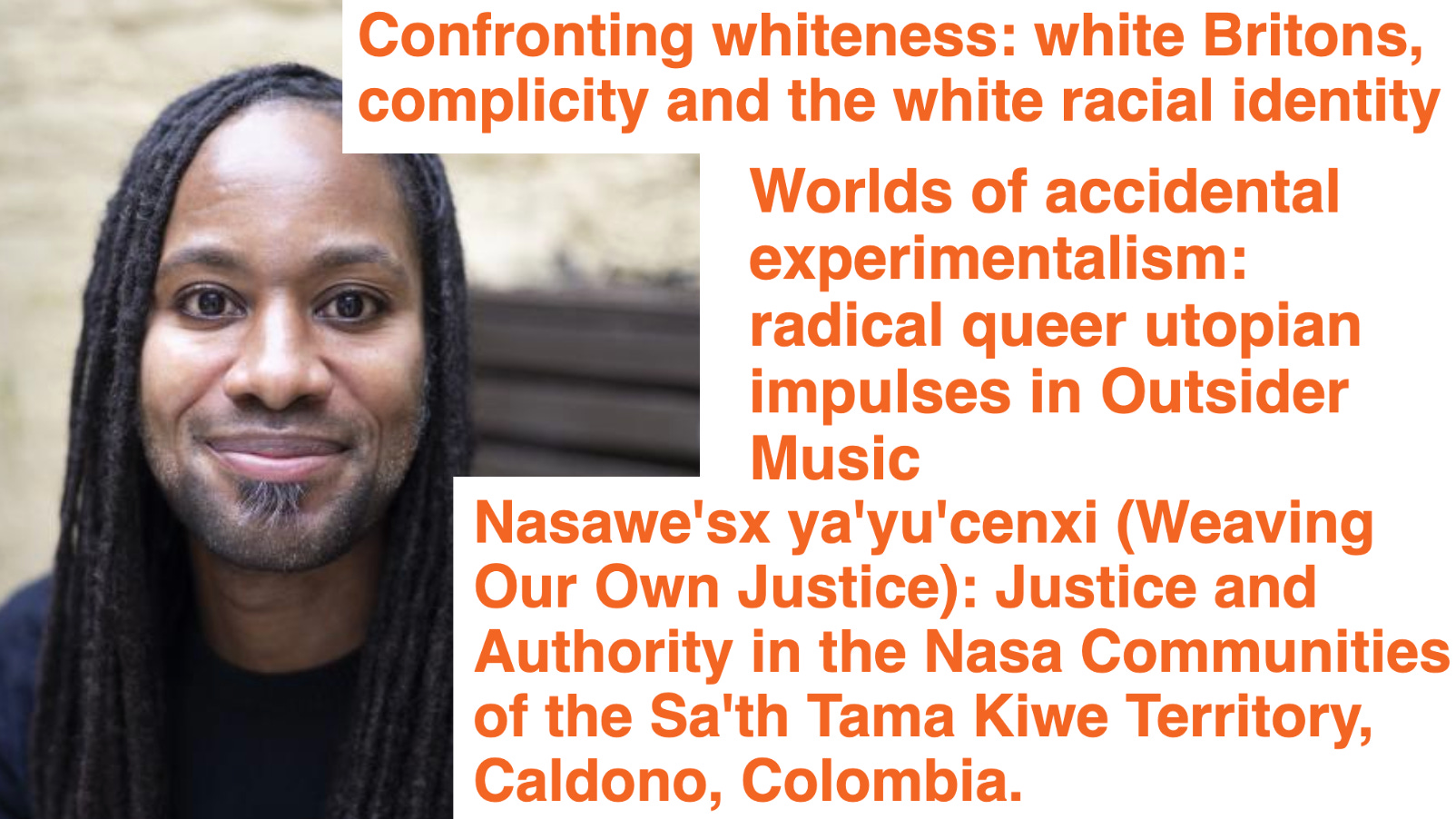
Almost every day there’s a new (often comical) story about Jason Arday, “the youngest black person ever appointed to a professorship at the University of Cambridge”, who has been accused of plagiarism and making outlandish claims about his life (such as that he ran 30 marathons in 35 days and appeared on the TV show Seven Up, which aired decades before he was born).
The debacle ultimately raises questions about academic standards at the University of Cambridge. It’s not only Arday’s alleged plagiarism, but the utter gobbledygook present in his work, which this elite university is clearly not immune to (as you will soon see). A year before he was appointed to Professor of Sociology of Education at Cambridge, he published Covid-19 and higher education: The Times They Are A’Changin, whose abstract reads:
With research and data from 16 countries and 5 continents, these articles explore the far-reaching impact of Covid-19 on higher education globally; accompanied also by a particular thread around lived experience, especially centring the voices of minoritised or marginalised members of the staff and student community. This is especially valuable given that understanding other countries’ successful strategies in handling the pandemic can forge global solidarity and collective growth.
Then there was his 2018 publication Dismantling power and privilege through reflexivity: negotiating normative Whiteness, the Eurocentric curriculum and racial micro-aggressions within the Academy. Who even needs to plagiarise when you have all these woke buzzwords available? Sadly none of this is unusual in academia, where sociological gobbledygook has become the norm.
It’s no wonder that when Dr Julian Huppert, Director of the Intellectual Forum at Jesus College Cambridge, advertised “three Research Fellowships” on X yesterday, he received an avalanche of sarcastic comments from those jaded with the Arday affair - and general woke-academia.
Burnside (one of the best accounts on X, in my view) replied:
“I invented underwater breathing, critical race theory and have just finished a doctoral thesis on the impact of hetronormative cultural biases on the career of Dianne Abbott. I am an expert at typos, misanthropy and braid weaving. I once ran 100 metres in 35 seconds.”
“I'm a queer straight white man of colour. My thesis is on my female neurodivergent intersection with cishet axis of oppression. I've already had an offer from Oxford, if you guarantee me a professorship I might be interested.”
Both are very funny - because they sound like real Cambridge University studies.
Don’t just take my word for it. I have rounded up 10 examples of studies that have recently taken place at the university - all paid for by YOU, the taxpayer:
Decolonising STEM and geography education in secondary schools: exploring educators’ agency and curriculum-making across England and Scotland
Funded Value: £247,268
Funded Period: Dec 25 - May 28
“Recently, drawing on the field of Decolonial Studies, scholars and educators have been investigating the impact of colonial histories on curriculum, higher education experiences, and teacher education both in formerly colonised communities and in the former colonial powers, including the UK. However, despite some initiatives linked to teacher education in England and Scotland, fewer studies exist which explore schoolteachers’ and teacher educators’ agentic experiences of decolonial curriculum-making in this former colonial power, particularly in Science, Technology, Engineering and Mathematics (STEM) and geography school-subjects. This is despite increasing scholarship emerging from formerly colonised communities such as the USA and Brazil which underline the importance of decolonial curriculum-making in these subject areas due to their own colonial entanglements and legacies around: scientific racism, health inequalities and medical mistrust, over-exploitation of natural resources, environmental racism, data colonialism, algorithmic biases and profiling, etc.”
Mongolian Cosmopolitical Heritage: Tracing Divergent Healing Practices Across the Mongolian-Chinese Border
Funded Value: £818,476
Funded Period: Mar 20 - Feb 25
“The research will revolve around integrated, comparative analysis of healing practices at two key field sites within the Mongolian cultural region, selected for their divergent politico-economic contexts that impact healing practices: Tongliao municipality in China’s IMAR and Mongolia, with a focus on Ulaanbaatar. The localized nuances in healing practices and everyday perceptions of them require sustained, long-term research afforded by ethnography. Fieldwork will include participant observation, semi-structured interview and patient/client survey, targeting patients, practitioners, healing techniques and inter-organizational and institutional relations among practitioner groups, clinics, and governmental institutions such as the Ministry of Public Health and local cadres. Photographic and film documentation will focus on healing techniques with a comparative aim set in historical context.”
