

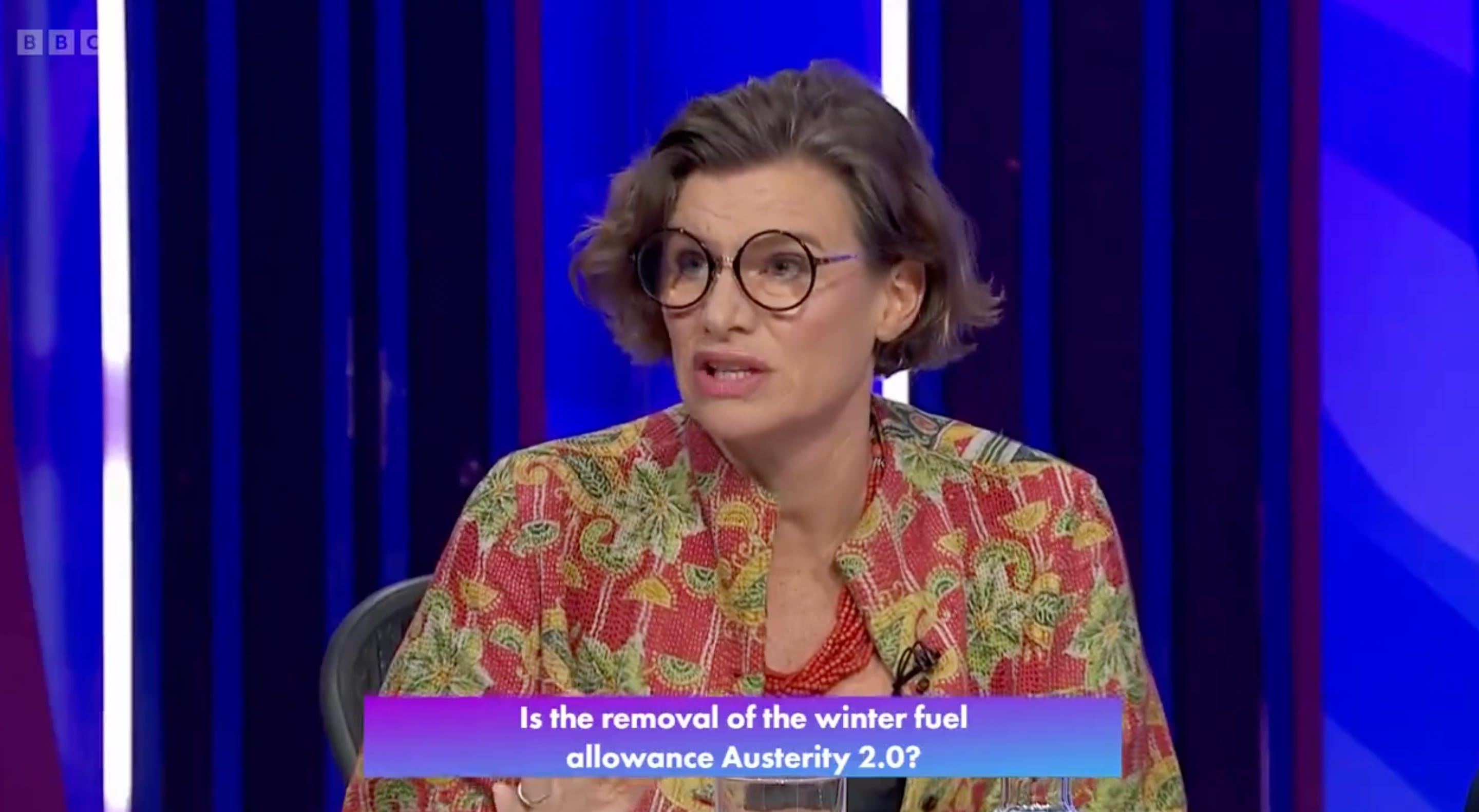
Update since writing this piece: Professor Mariana Mazzucato was on Question Time AND wrote for The Times about her favourite word:
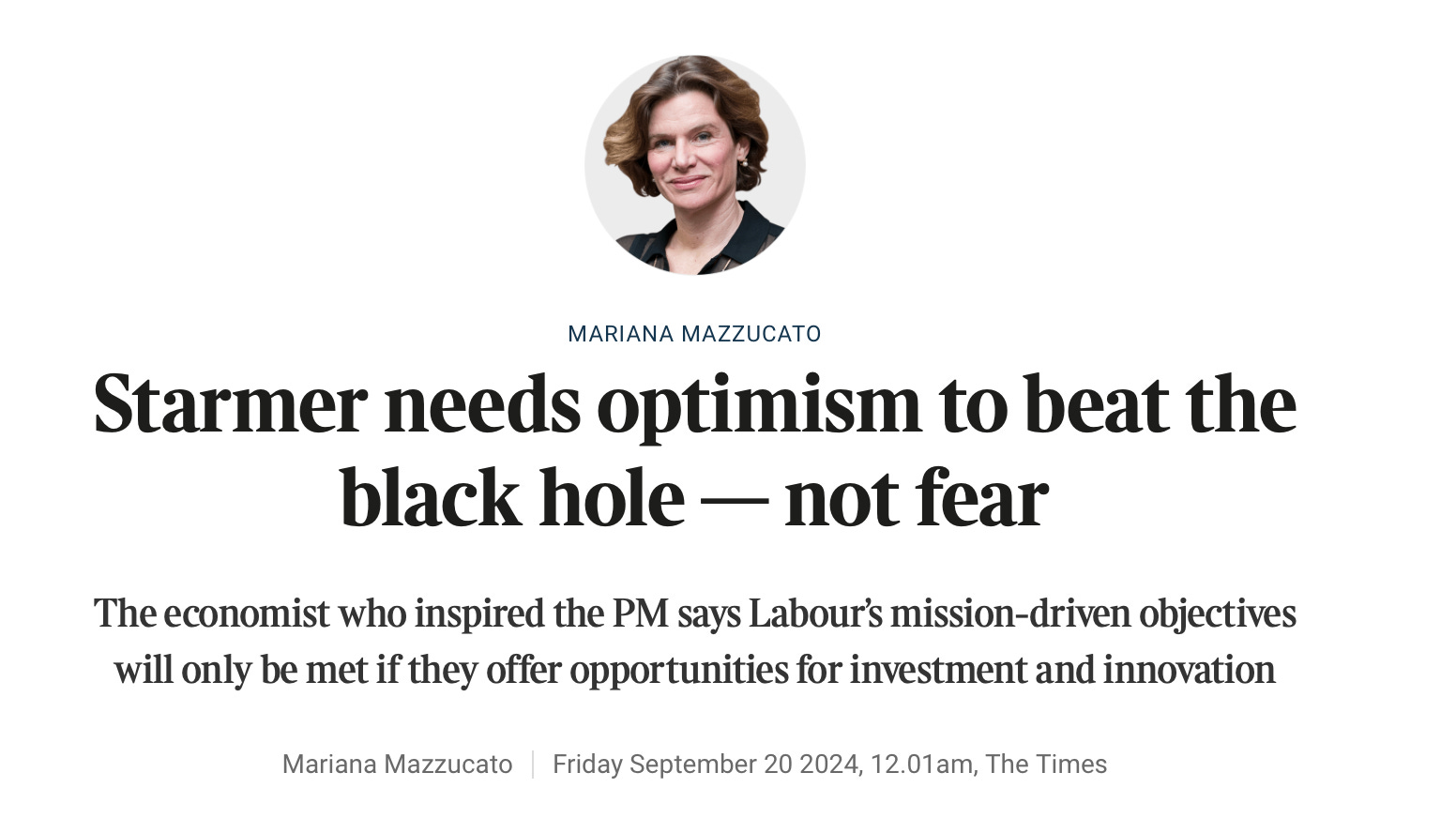
*First published on Wednesday
Today (5.30pm) an extremely exciting event is taking place, titled: Delivering purpose-driven government in the UK.
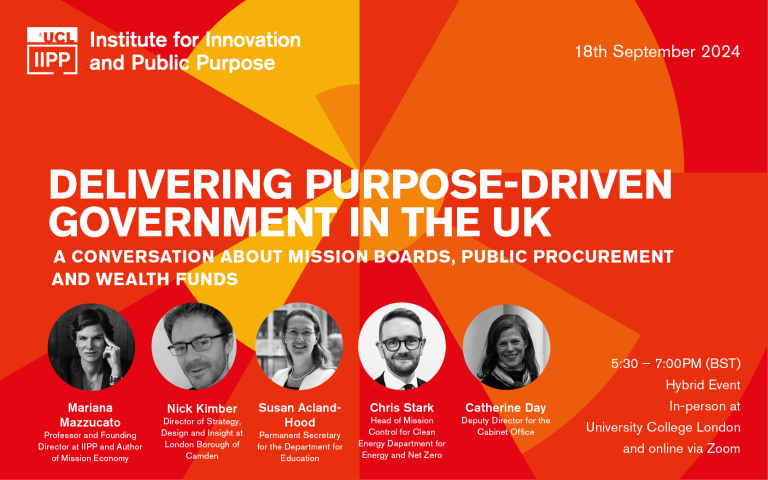
It’s hosted by the UCL Institute for Innovation and Public Purpose (IIPP), an organisation I wanted to introduce readers to - especially as its events include so many big political names.
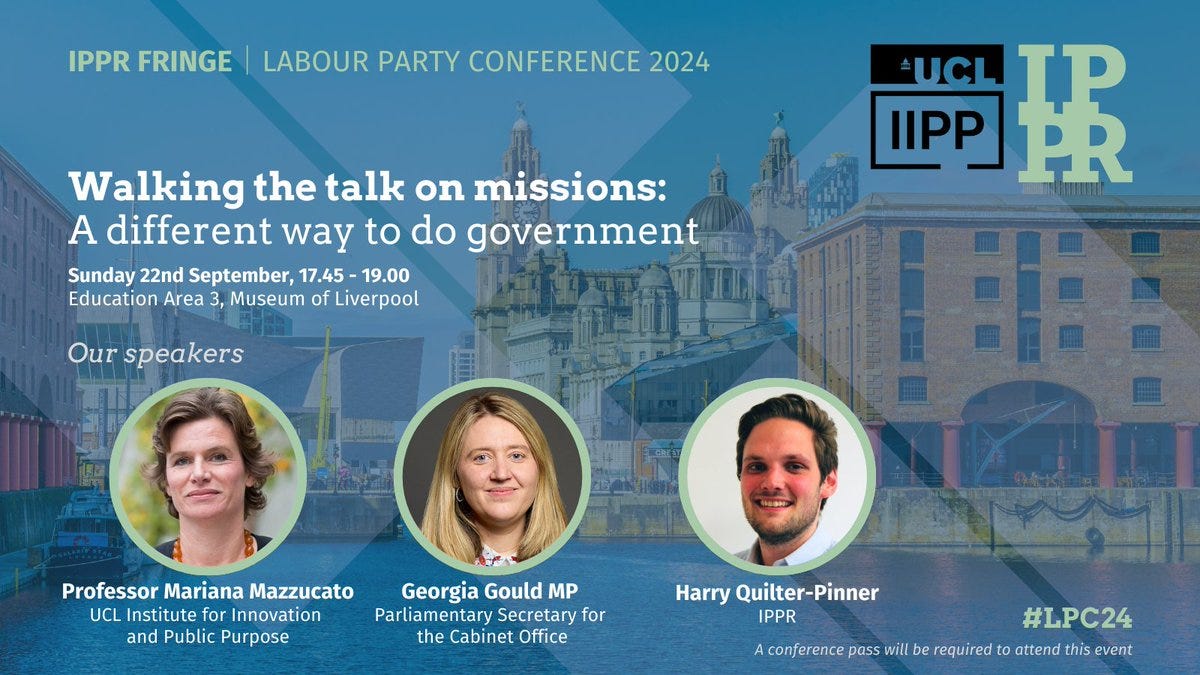
On Sunday, for instance, the IIPP is holding an event with Georgia Gould, the Parliamentary Secretary for the Cabinet Office, at the Labour Party Conference:
Gould is the former leader of Camden Council and the subject of my recent piece - which looked into her seven-year legacy running the borough:
Georgia Gould - Labour's "red Princess"

Have you heard of Georgia Gould, the new Labour MP for Maida Vale & Queen's Park?
But back to IIPP…
IIPP is run by Professor Mariana Mazzucato, whose economic expertise is sought after globally. As its 5-Year Impact Report highlights, she’s worked with everyone from the World Health Organisation…
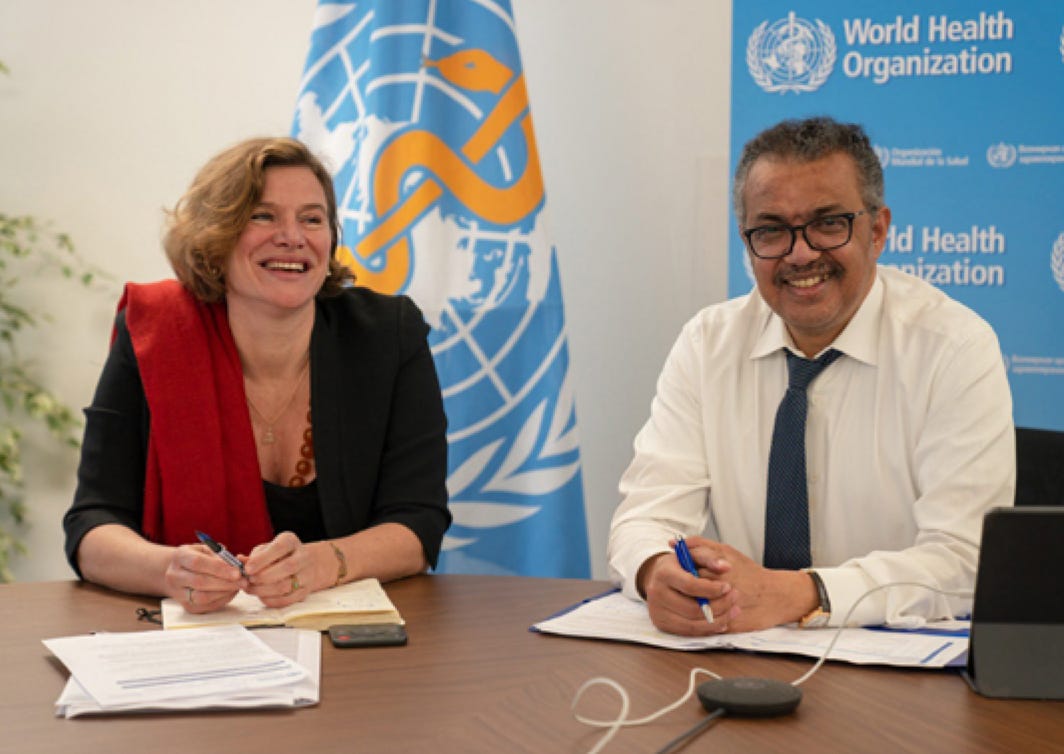
… to Nicola Sturgeon:
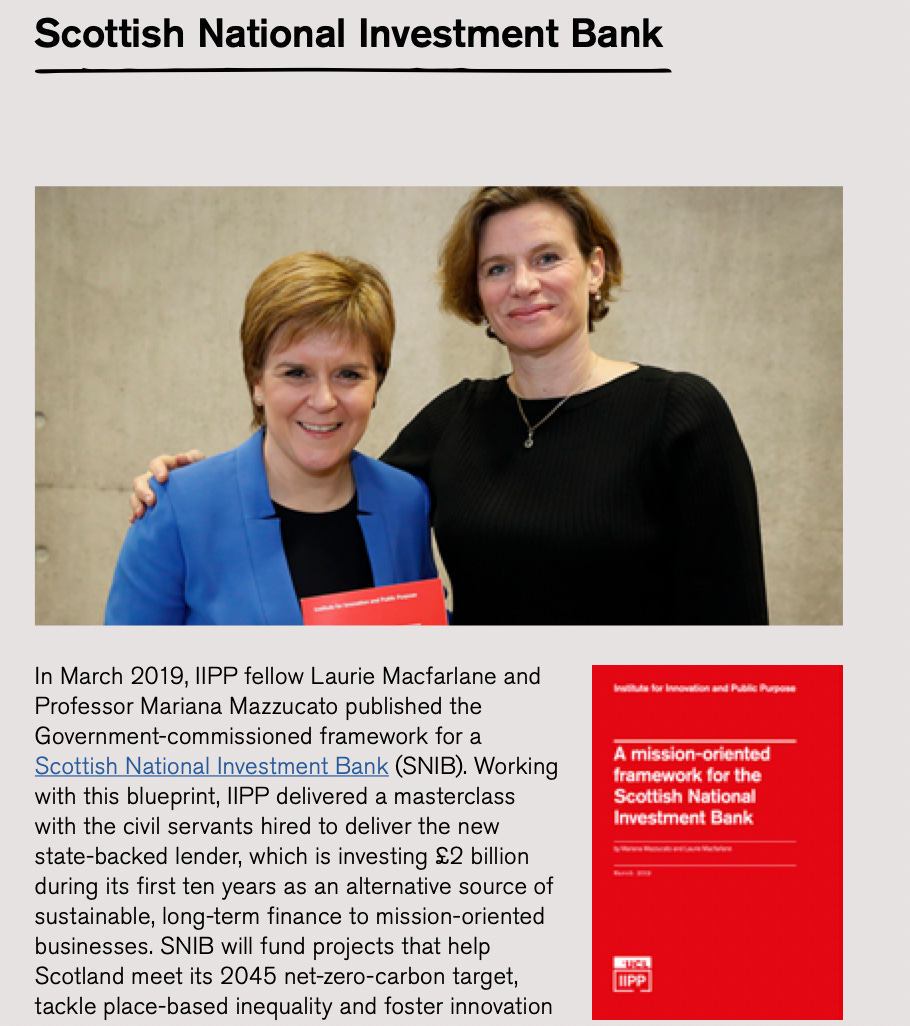
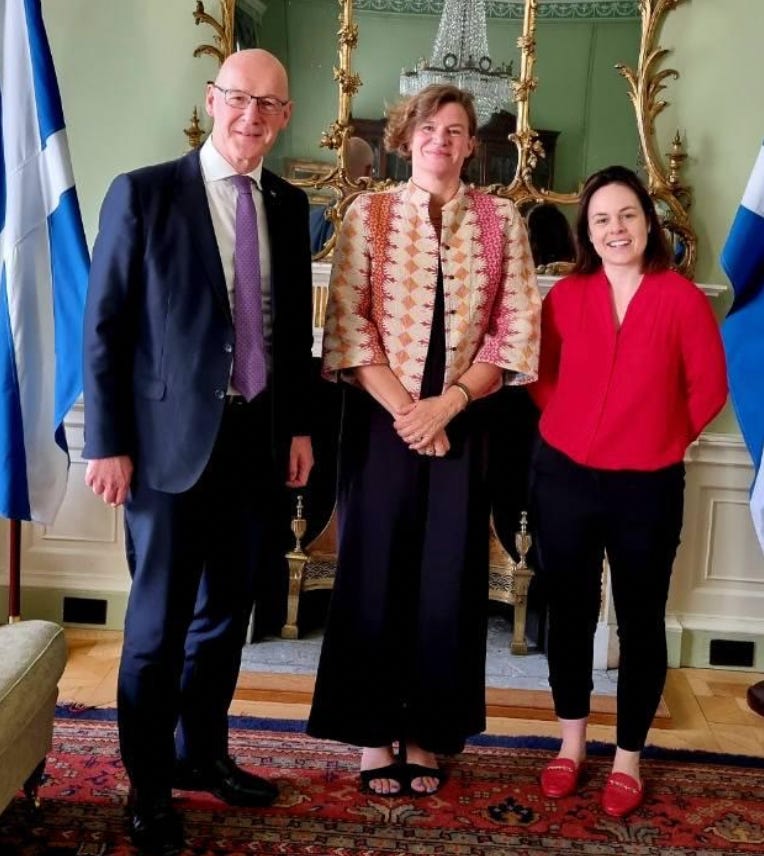
… and more recently John Swinney and Kate Forbes (just this Monday actually):
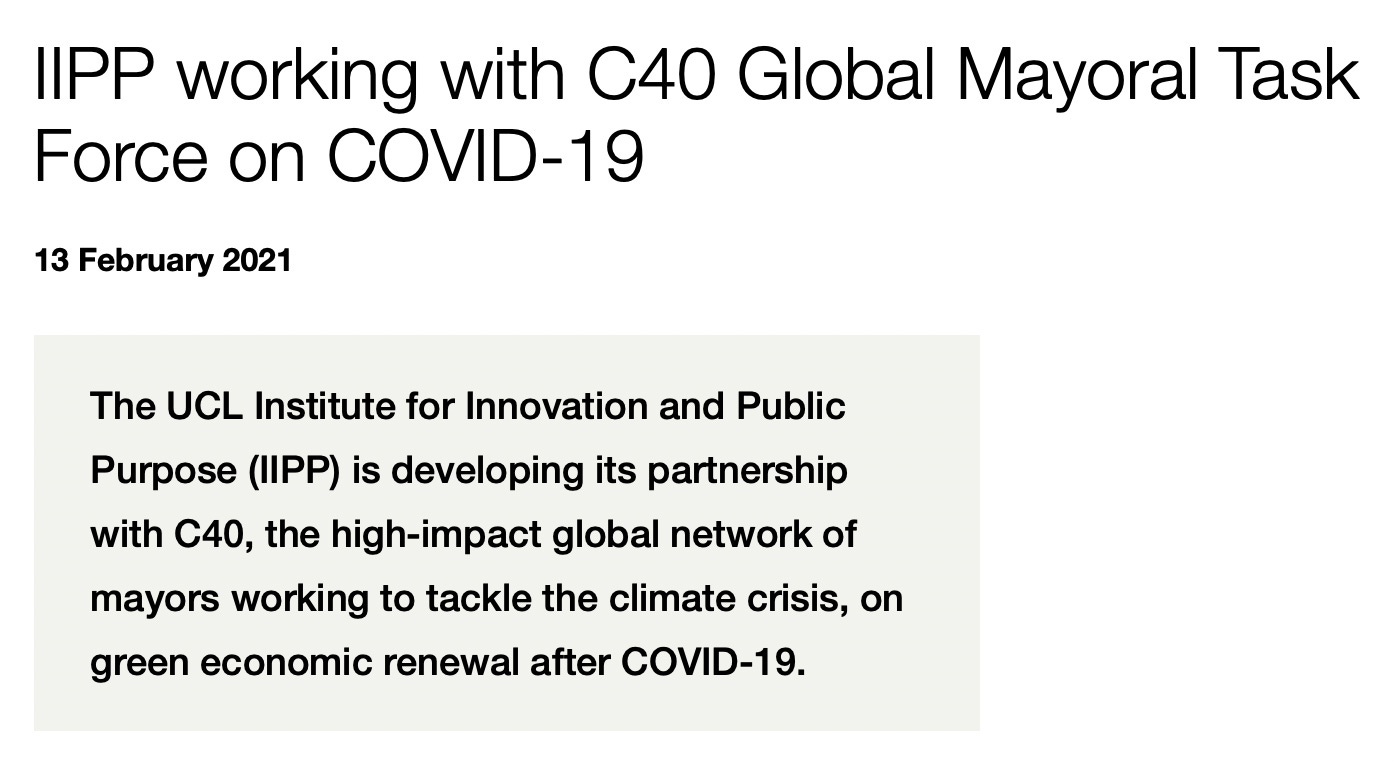
… as well as the C40 Global Mayoral Task Force (where Sadiq Khan is Co-Chair):
… and she was asked to submit evidence to Parliament under the last Conservative Government):
It’d be impossible to name every organisation Mazzucato has worked with in one piece.
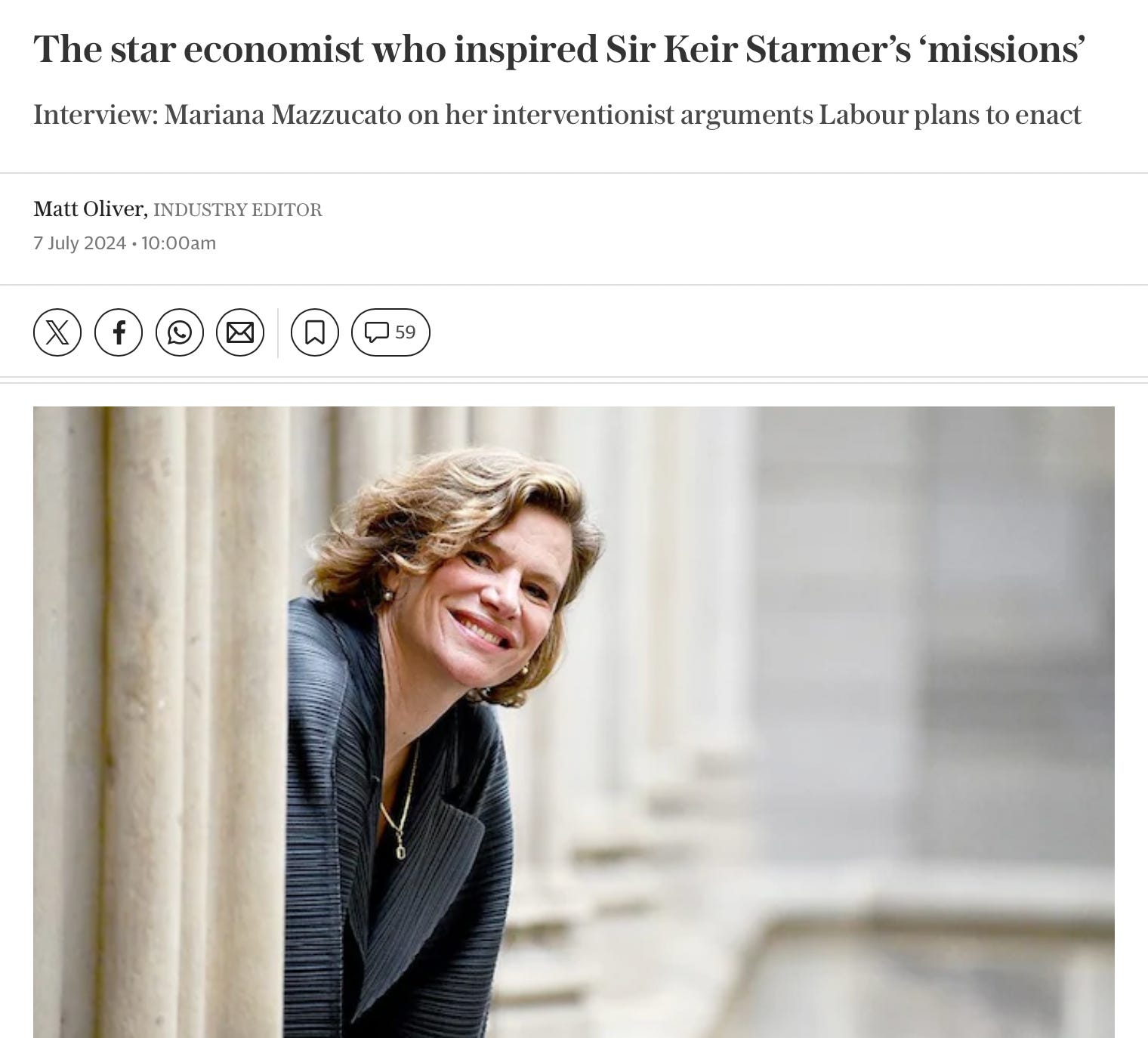
But I thought it’d be interesting for readers to see how her work has influenced the Labour Party; she has been described as the “star economist who inspired Sir Keir Starmer’s ‘missions’”:
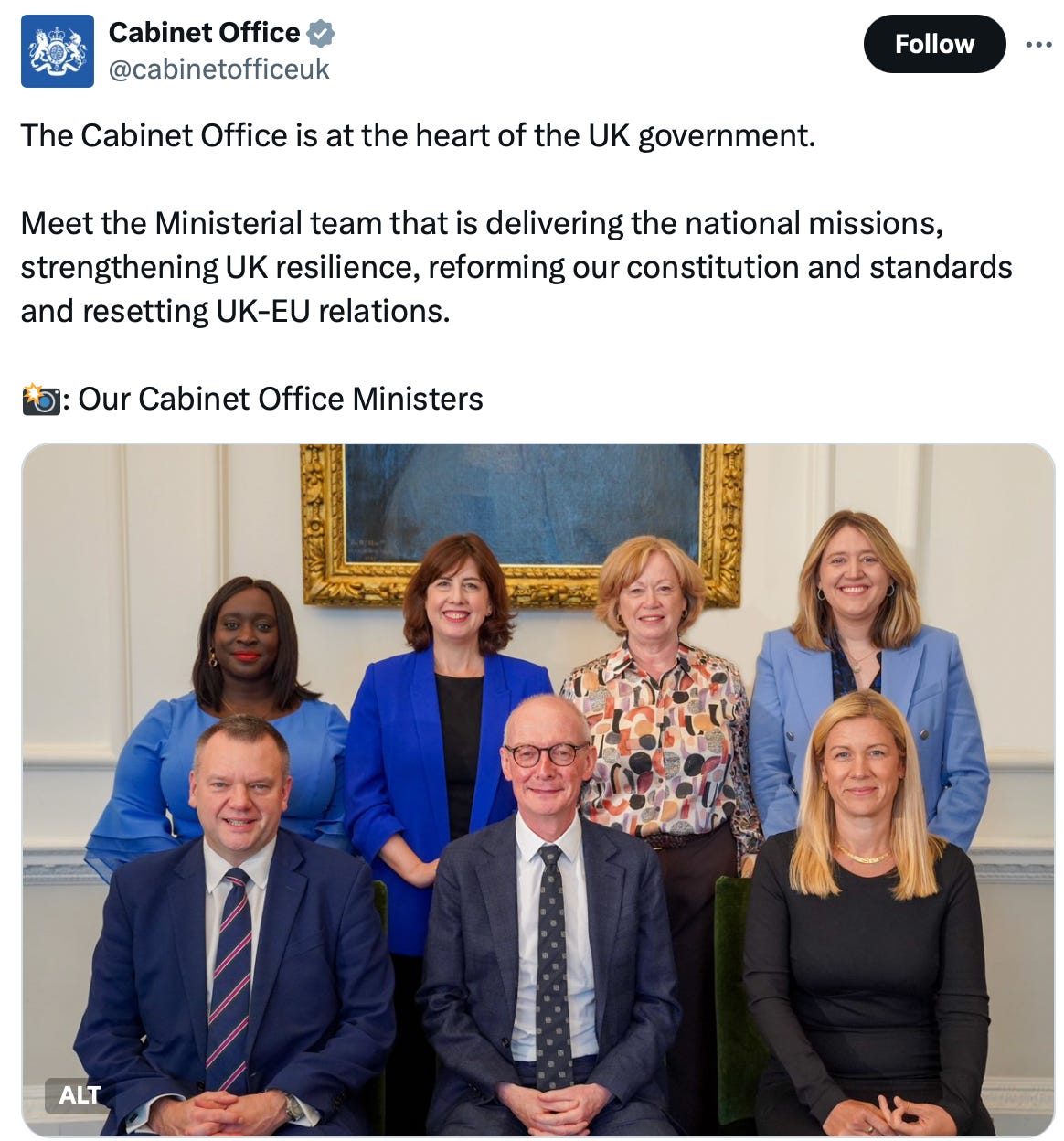
You may have noticed the number of soundbites Labour has with “mission” in them, thanks to Mazzucato. Take yesterday’s post by the Cabinet Office about “the Ministerial team that is delivering the national missions” (Gould is pictured furthest on the right, incidentally):
And Ed Miliband’s tweet (the same day) about Labour’s “clean power mission”…

Never mind that the party has its own Head of ‘Mission Control’ for Clean Power 2030, Chris Stark (who happens to be taking part in the IIPP event at 5.30pm today).

Mazzucato has been using the word “mission” since at least 2017, when she first set up the IIPP “to change how governments understand their role in shaping economies that are conducive to human and planetary wellbeing – through cutting edge academic theory on the role of the state, and through policy work with partners around the world that is translating this theory into practice.”
Mission-Oriented Innovation Policy (2017):
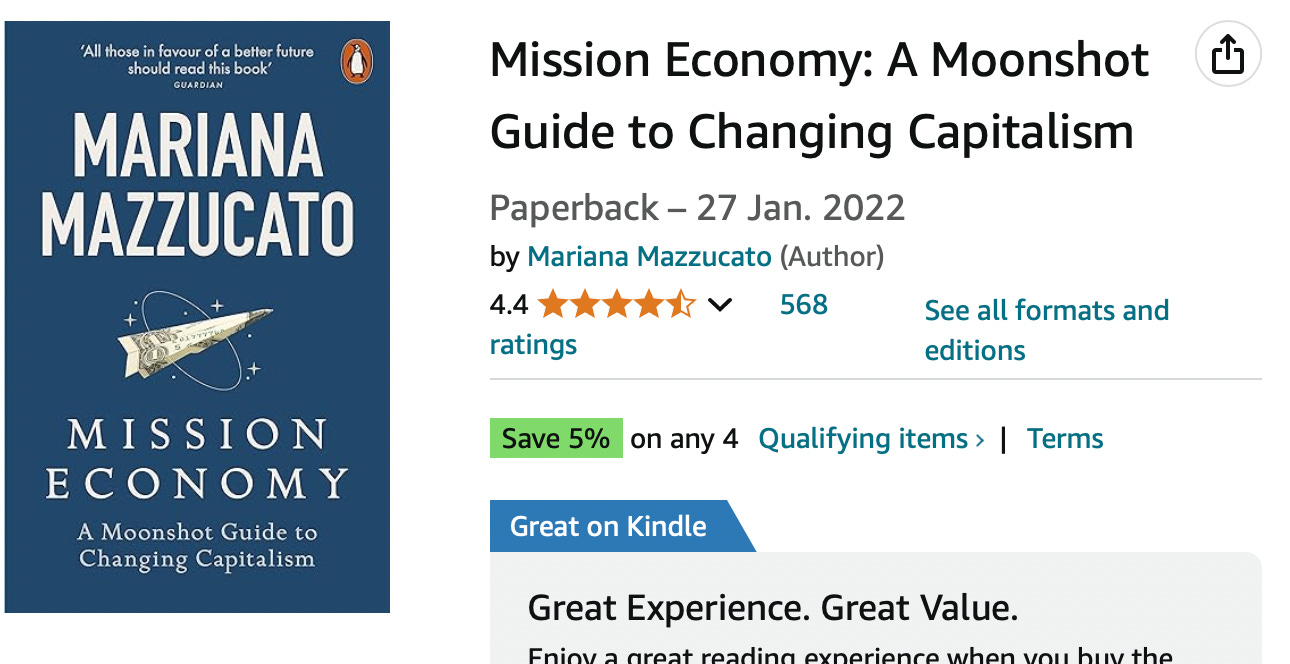
Mission Economy (2022):
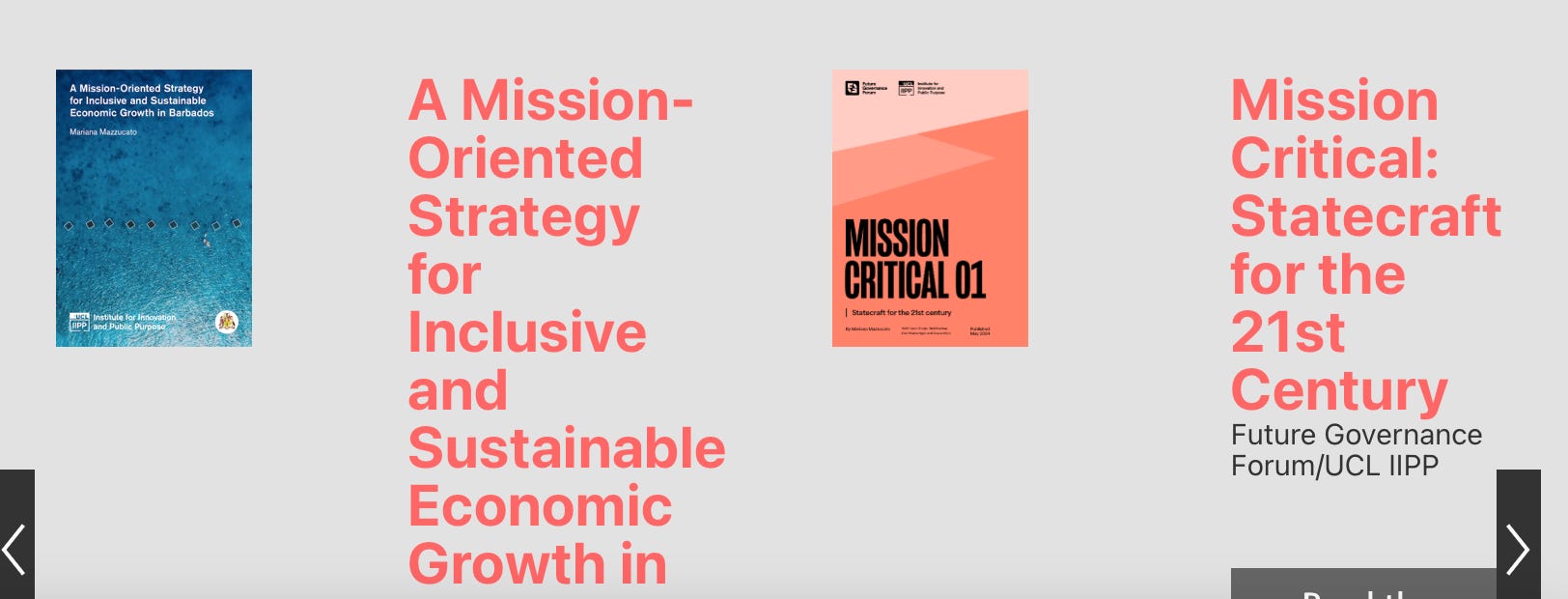
The IIPP website:
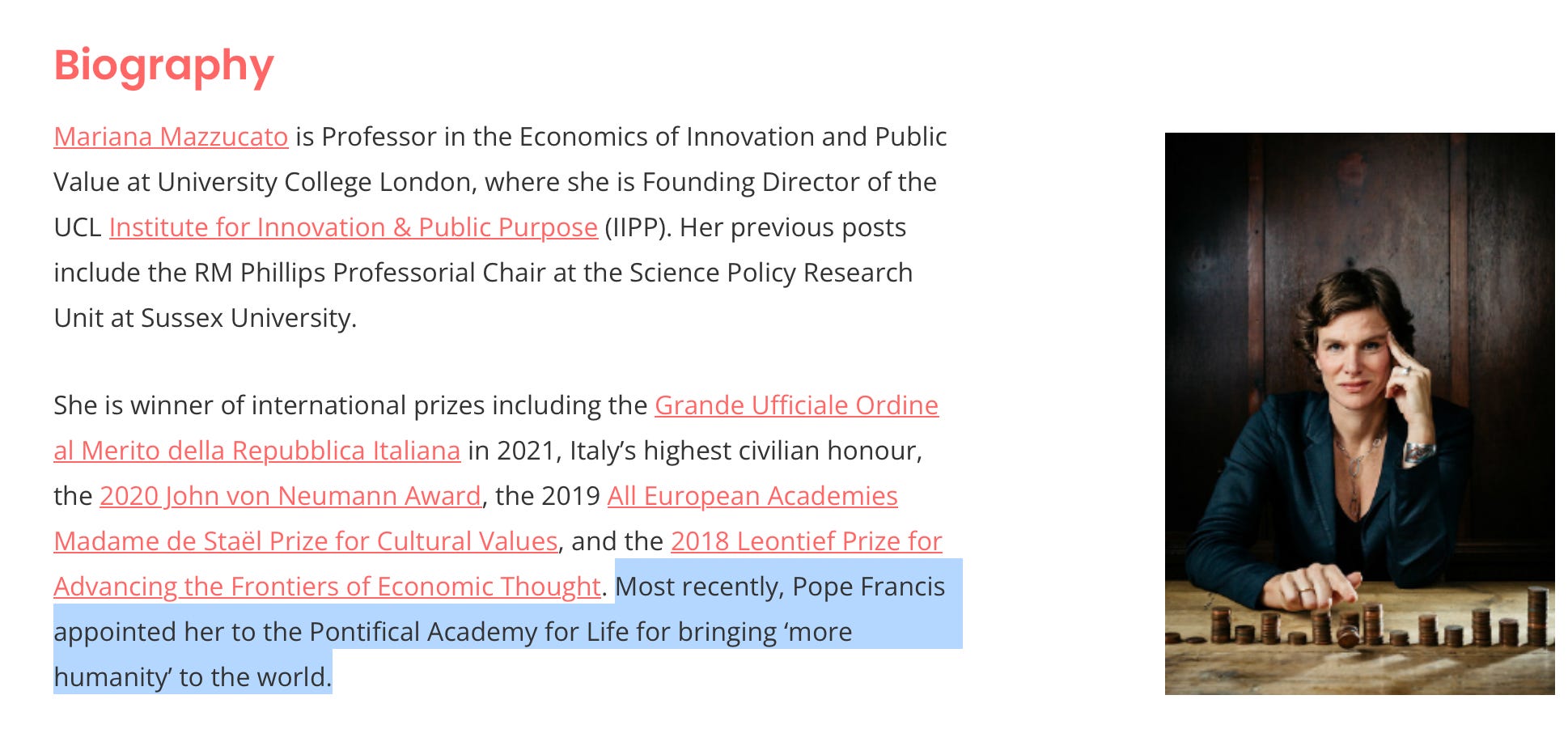
Mazzucato, to explain more, has been described as “One of the world’s most influential economists... on a mission to save capitalism from itself”… (naturally the quote had to include the word ‘mission’).

She’s “author of the high-impact report on Mission-Oriented Research and Innovation in the European Union” which turned “‘missions’ into a crucial new instrument in the European Commission’s Horizon innovation programme”…
… and even in Pope Francis’s good books for “bringing ‘more humanity to the world’”. Watch out Bob Geldof!
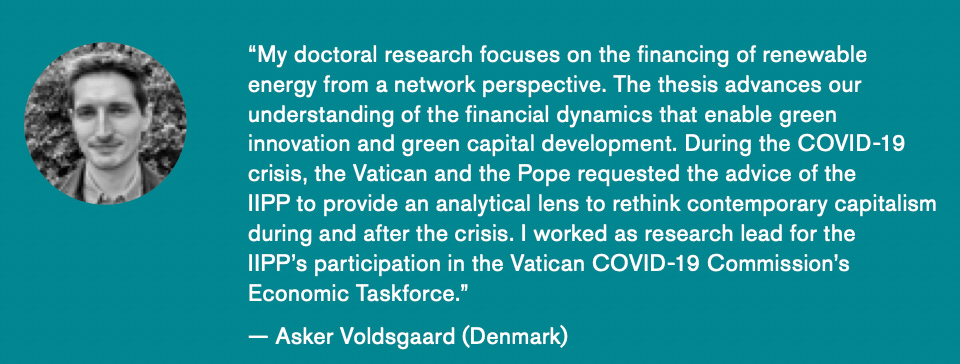
Pope Francis has been so impressed that “During the COVID-19 crisis, the Vatican and the Pope requested the advice of the IIPP to provide an analytical lens to rethink contemporary capitalism during and after the crisis”:
Mission lift-off?
Given that Mazzucato has been developing missions left, right and centre since at least 2017, I thought I’d have a look at how they have improved Britain since then.
One good case study is Camden - to reiterate, Georgia Gould (now a Cabinet Minister, doing an event with Mazzucato over the weekend) was its leader for seven years, as well as the Chair of London Councils.
In 2020 Gould and Mazzucato worked together to create “missions” for the Borough…

… and produced a report on “Camden’s missions for renewal” in 2021:
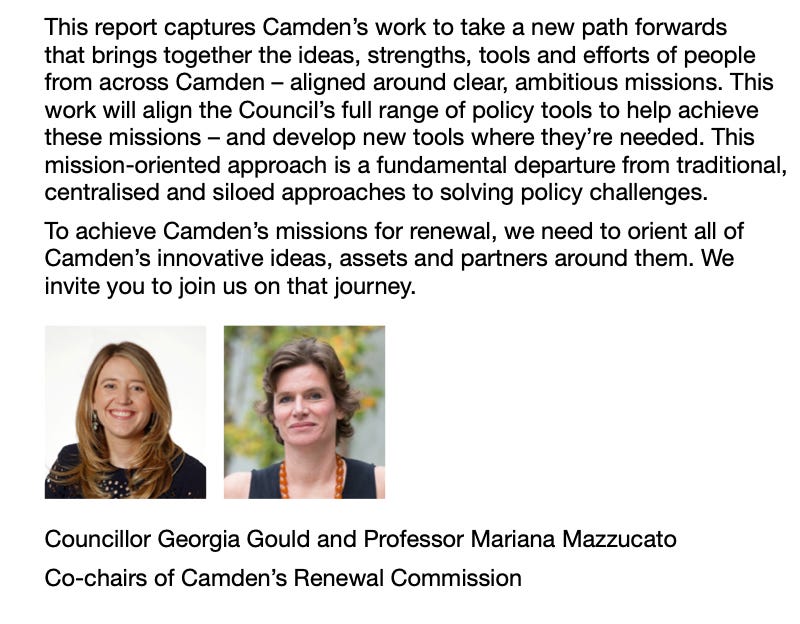
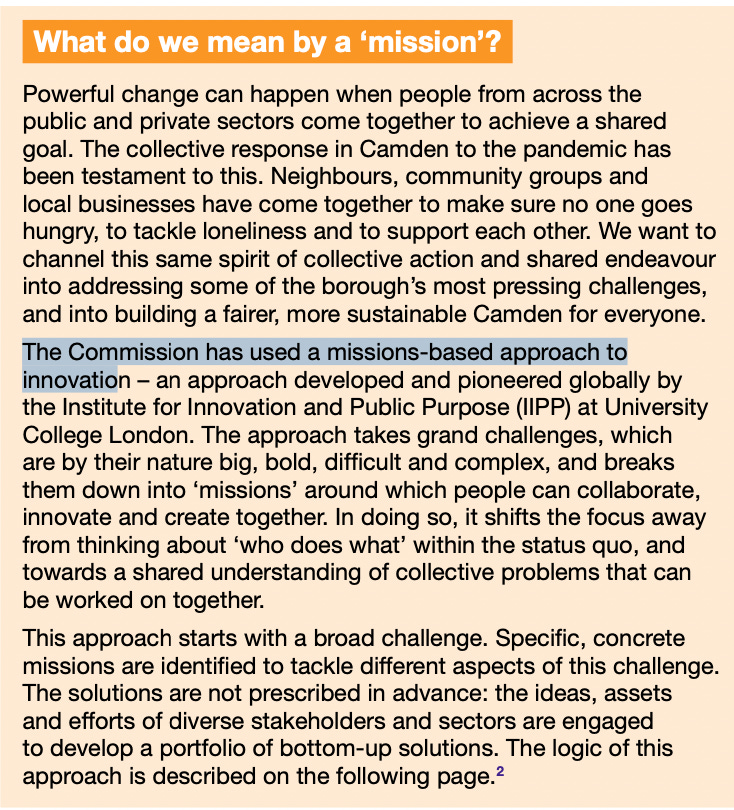
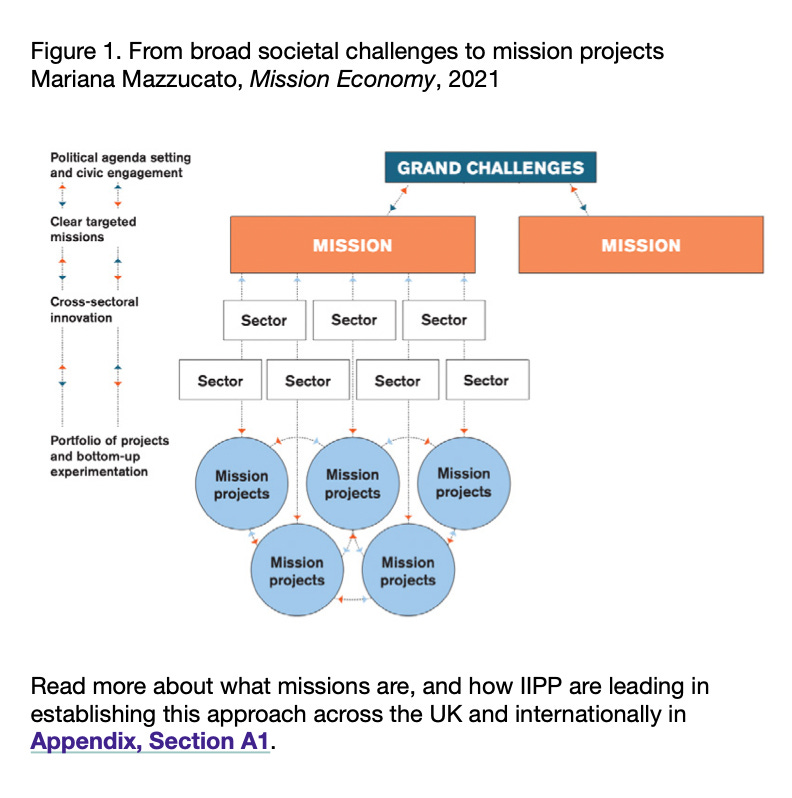
It was very informative - a selection of mission-critical slides below:
“Borough-wide diversity in positions of power”

“The Commission has used a missions-based approach to innovation”
“Mission projects”
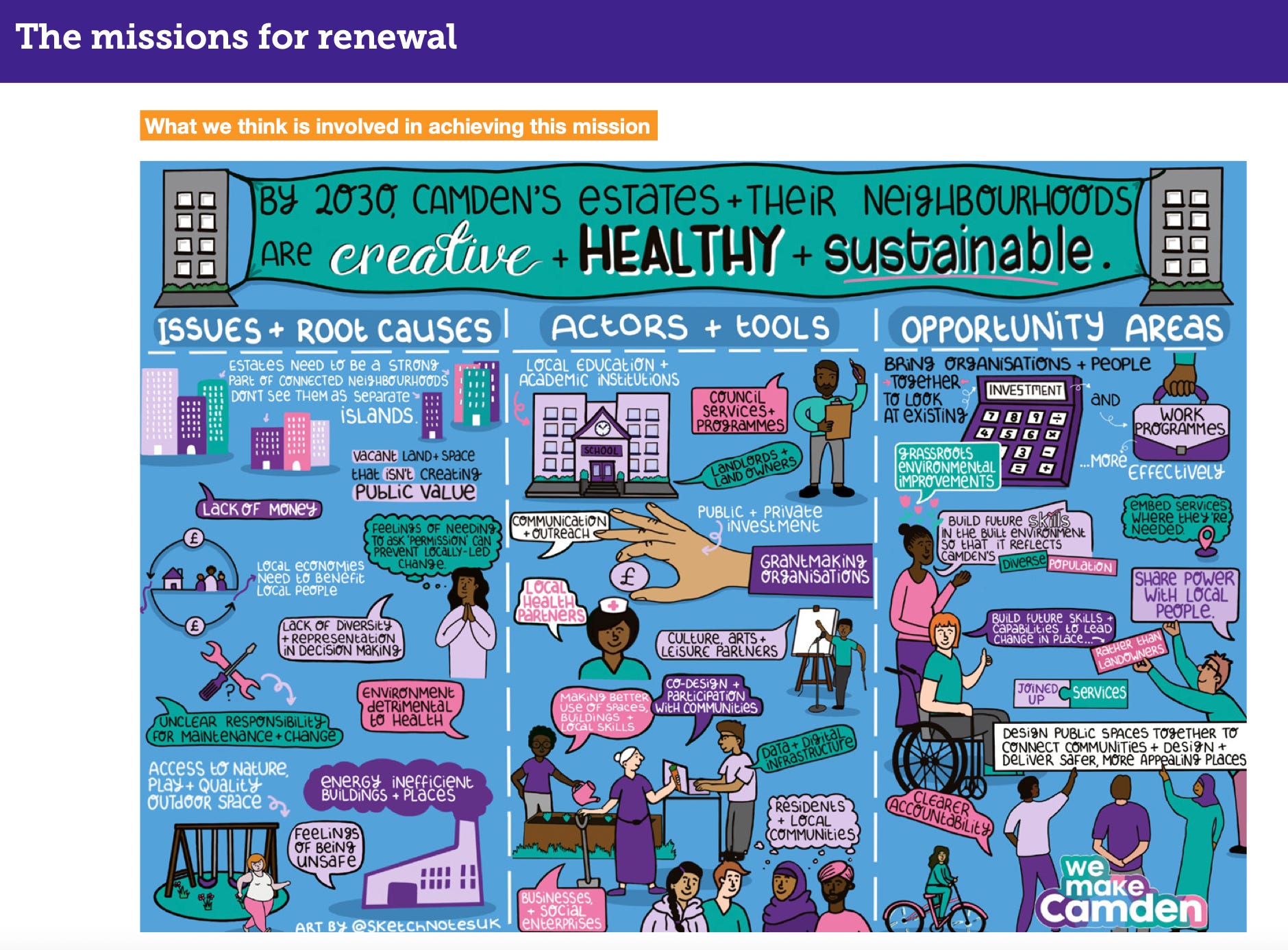
I particularly like the artwork in the report - stunning!

Gould as a cartoon:

Mission in practice
The report makes clear that the missions must be “time-bound” and “realistic”. So you might think that there’d been some visible results by now, especially as the report says “By 2025, every young person has access to economic opportunity that enables them to be safe and secure” - which isn’t too far away.
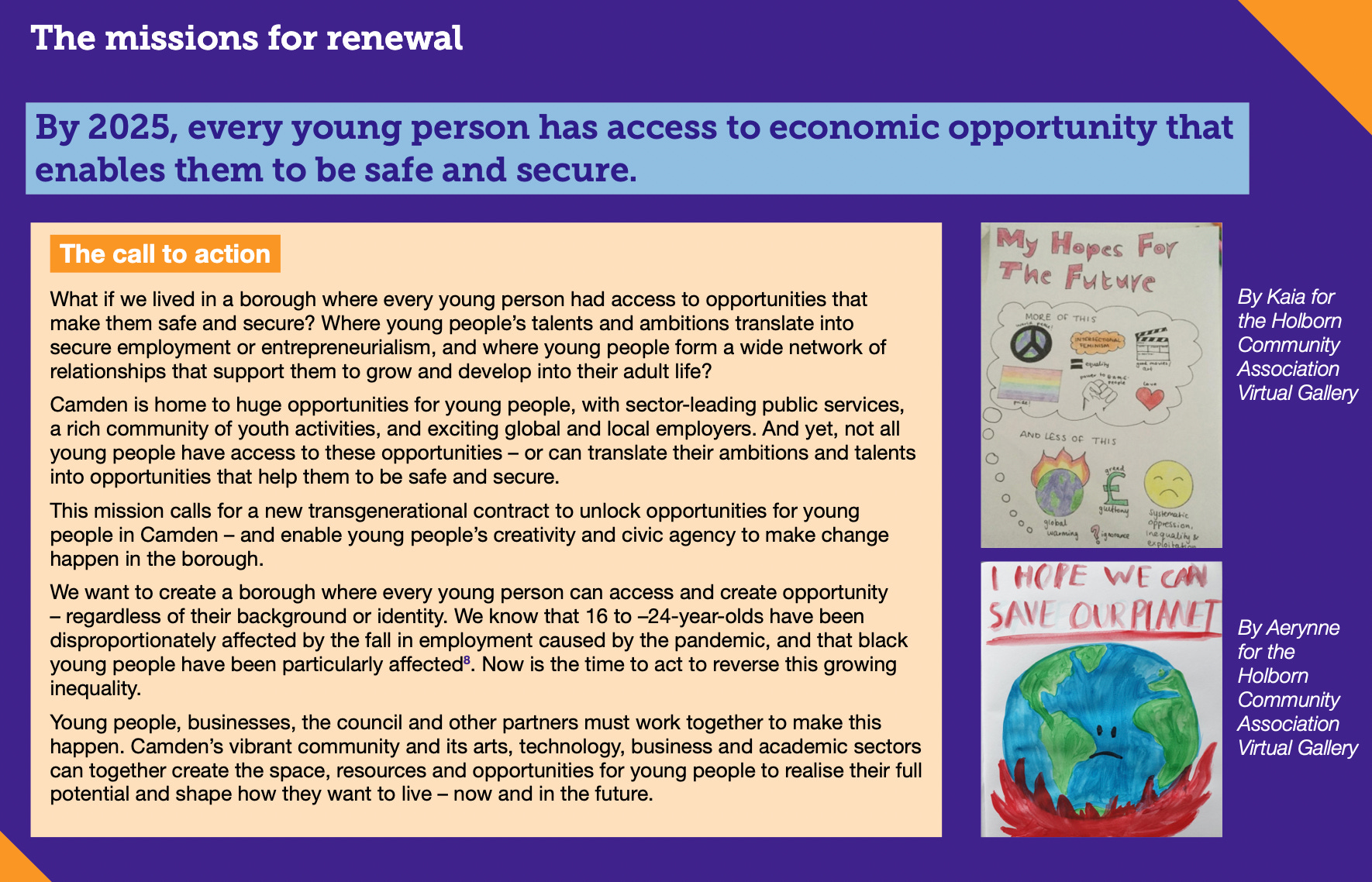
Having visited Camden recently, I was curious about where all these missions were hiding:

Maybe the people living under the bridge didn’t get the memo about missions…


I’m not the only one a bit confused about the Mazzucato effect.
Mazzucato has advised the EU - something she flagged in her 2021 report with Camden…

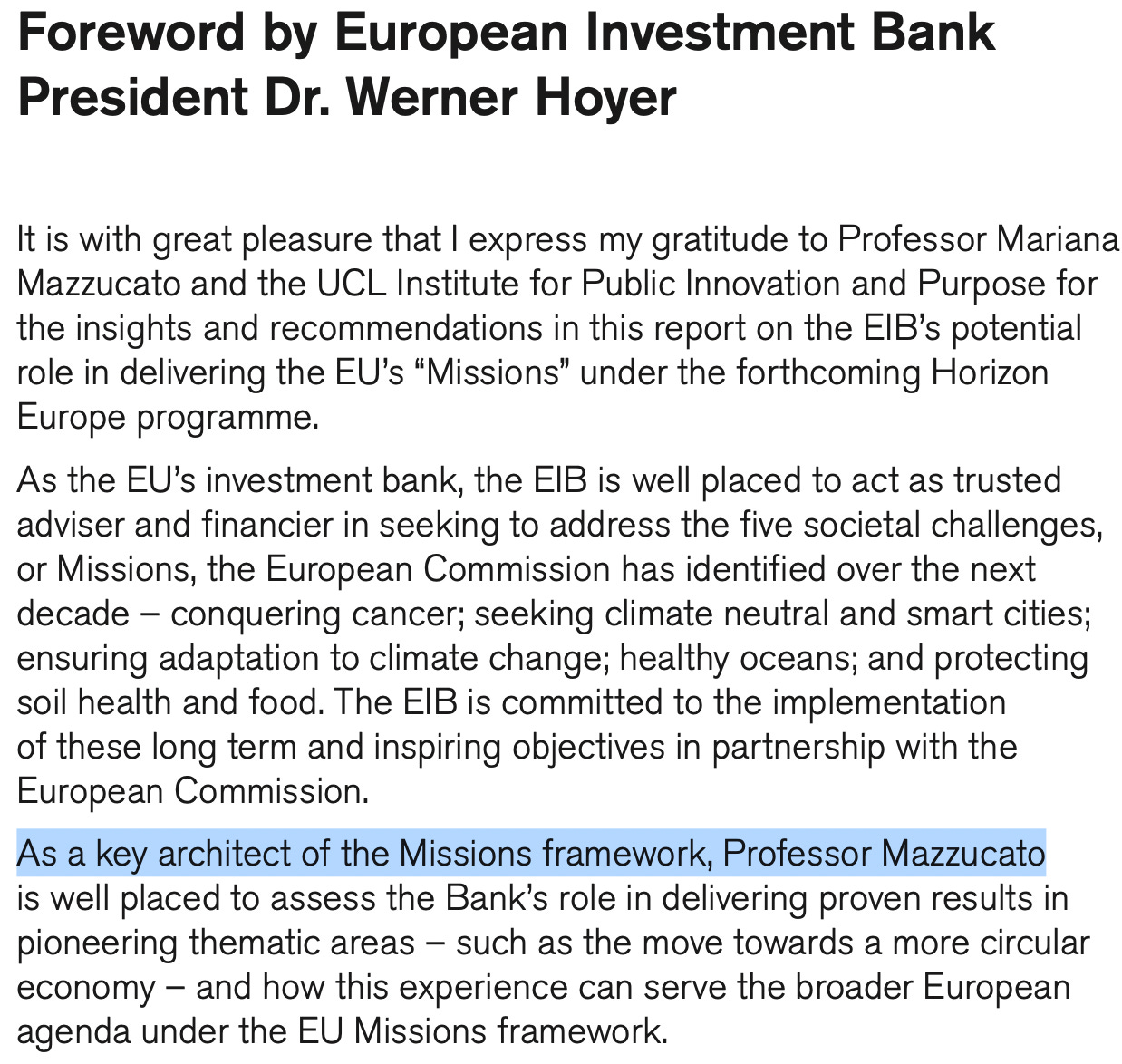
… and is clear from her 2020 report The EIB and the new EU missions framework, where the President of the European Investment Bank thanks her:
Roll on four years and the EU seems to have had a change of heart, though:
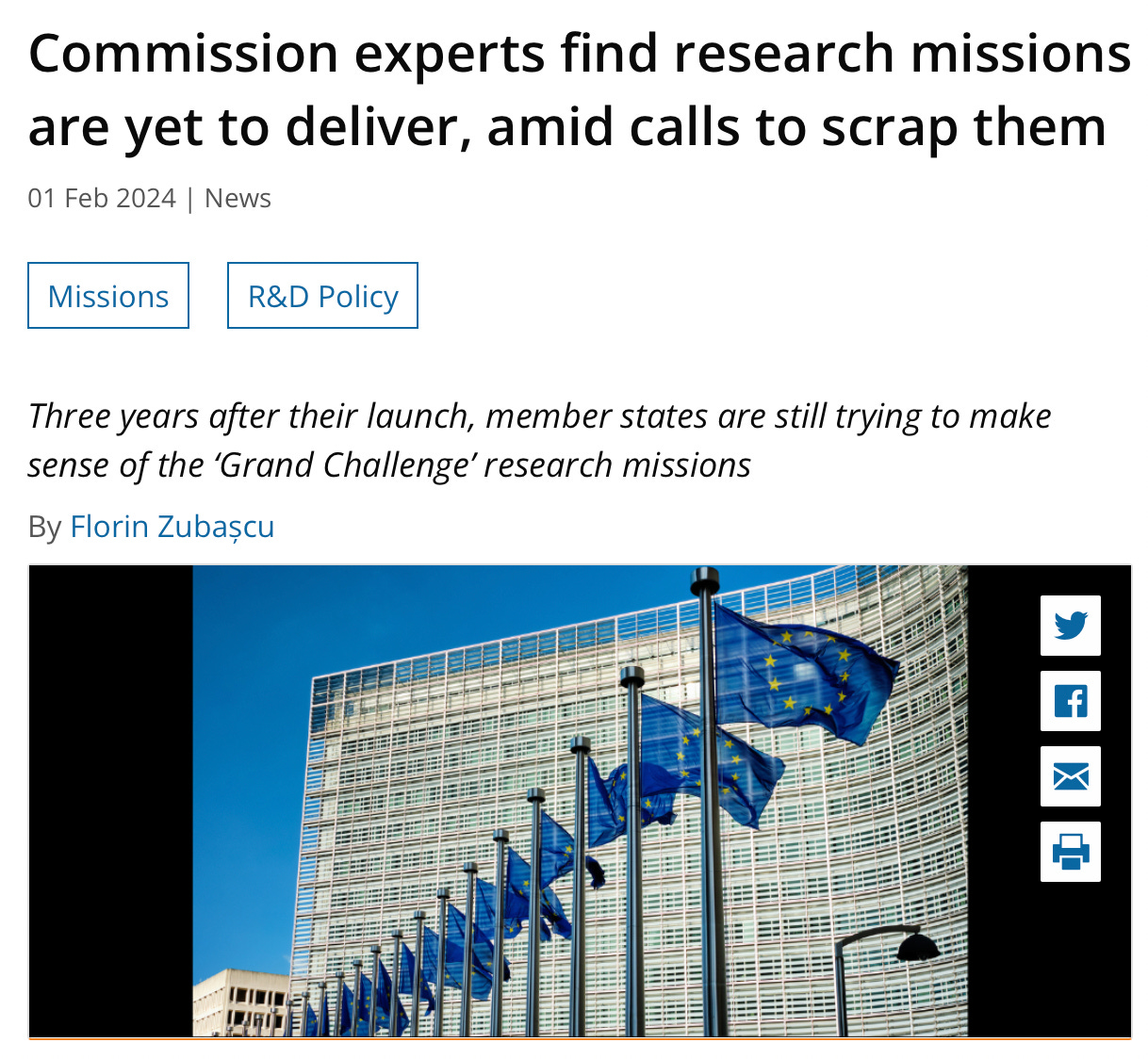
The EU’s ‘Grand challenge’ research missions have a long way to go to pull in public and private resources and deliver on their objectives, according to a report by a Commission expert group published on Friday.
The report comes at a time when member states and research stakeholders in Europe are calling for the missions to be scrapped or moved outside the next EU framework programme for research and innovation, FP10, which is due to start in 2028.
The Commission launched the missions in 2021 with a budget of €1.9 billion, which was intended to attract further investment. The goal was to give a boost to multilevel research cooperation and deliver results in five key areas: fight cancer, help Europe adapt to climate change, protect seas and rivers, promote carbon neutral cities and foster soil health.
Now, a few years in, some research stakeholders say the missions should not feature in Horizon Europe’s successor programme.
Otmar Wiestler, president of the Helmholtz Association said the missions have not delivered outcomes that match the level of funding. “My impression is the money is just distributed at large scale, there is no focus on excellence, or quality, and eventually it will fail,” he told Science|Business in an interview this week.
It’s ironic that Labour is seeking to reset UK-EU relations through “national missions” (as per the Cabinet Office image above) months after this news.
In general, it’s interesting that - despite these missions influencing UK policy since 2017 - and Mazzucato being One of the world’s most influential economists - the British economy looks… well, worse than ever.
Whatever could be the explanation?
Surely if you say “mission” a million times that leads to economic growth?
I suspect we’ll need a few more mission reports to find out…
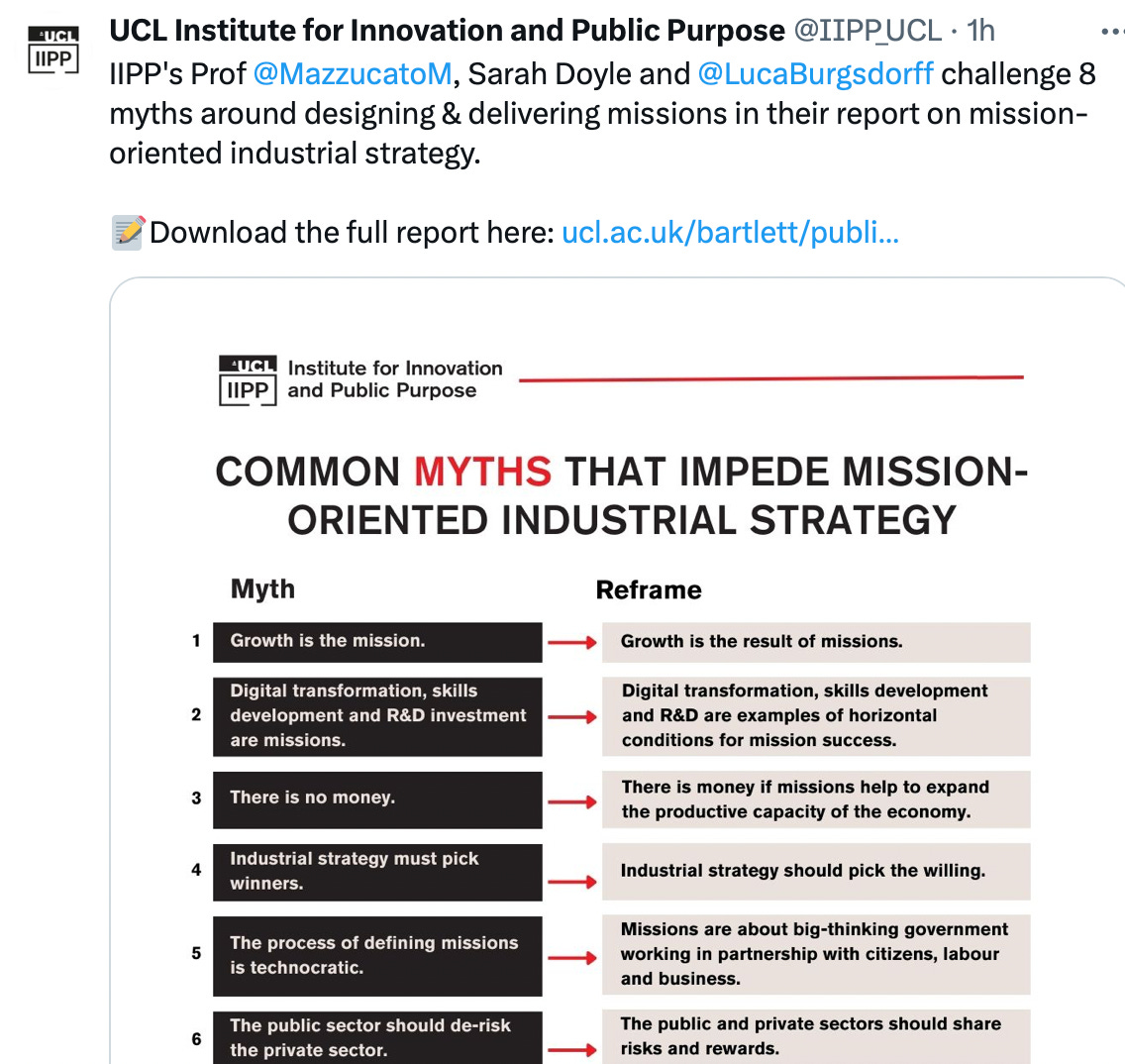
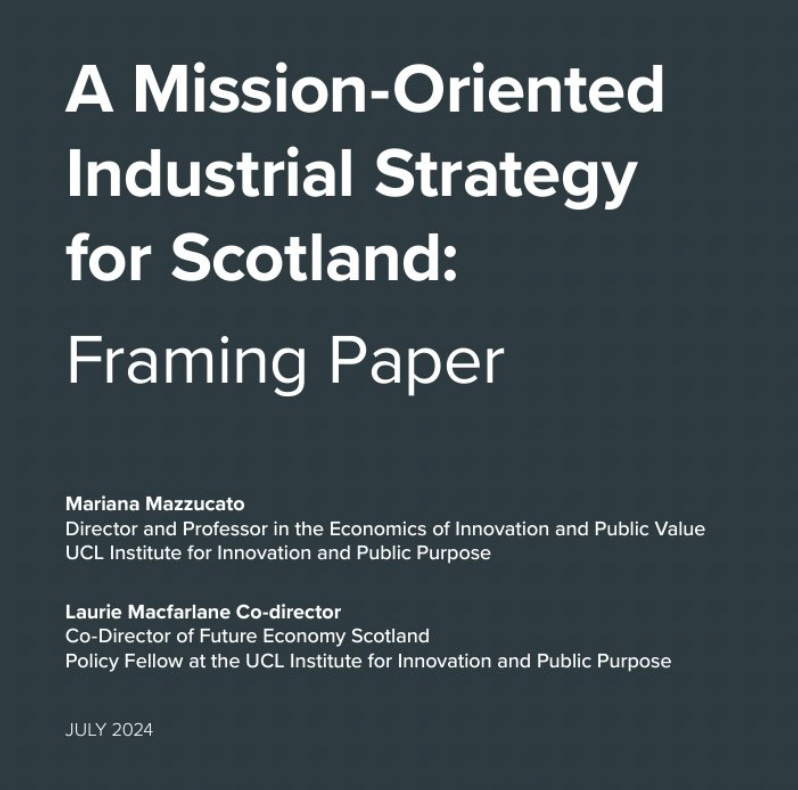
Fancy tuning into the event at 5.30pm - here’s a link (in an article that says ‘mission’ 15 times).
The myth/reframing slide is hilarious.
Myth: missions are technocratic.
Reframing: missions are really about big thinking government working in partnership blah blah blah
or even better, "myth: there is no money" reframing: "yes there is!"
She must be very charismatic as her missions read like a compilation of buzz words within minimal substance, resulting in nothing greater than elite word salad.